

Estimate Land Value With Our Free Land Value Calculator
Wondering “What’s my land worth?” Use our free land value estimator to get a quick estimate based on your property’s location and acreage.
The calculator gives you a useful starting point without having to research comparable sales or calculate land values yourself. Try it out, it only takes a few seconds.
Tell us more about your land to narrow the range.
Your estimate is a starting point. Get a personalized report with county-level data and value factors — free, delivered to your email.
We've saved your request for a personalized County Land Value Report. You'll receive it by email once it's ready.
For further information, please see our Privacy Policy.
Watch how it works
After you receive your estimate, you'll also have the option to Get an Offer. If you choose to continue, Haystack Land Company can take a closer look at your specific property and provide a no-obligation cash offer
How Does a Land Value Estimator Determine My Land’s Value?
A land value estimator gives you a starting point for answering “How much is my land worth?” Our calculator uses USDA land-value data for your area along with the acreage you enter to estimate a value range.
Using local data matters because land prices can vary widely from one area to another. A parcel in Idaho should not be estimated using the same averages as a large ranch in Texas.
The calculator also adjusts for parcel size. A 5-acre parcel may sell for a very different price per acre than a 200-acre tract, even when both are in the same county.
Why Local Land Value Data Matters
Our estimator uses county-level land-value data instead of relying on one national average. This creates a more useful starting point for estimating what land in your area may be worth.
However, the calculator cannot evaluate every detail of a specific parcel. Road access, zoning, utilities, terrain, land use, improvements, and recent comparable sales can all affect the final value.
For a closer look at your specific property, you can compare recent nearby sales or request a land review after receiving your estimate.
How to Estimate What Your Land Is Worth
One of the best ways to estimate land value is to look at recent sales of similar properties in your area. Start by finding several parcels with similar acreage, location, land type, zoning, and road access. The closer those properties match yours, the more useful they are for estimating value. Recent sold properties are usually more helpful than active listings. A listing shows what a seller hopes to receive, while a closed sale shows what a buyer was actually willing to pay.
You can also calculate the price per acre of each comparable sale by dividing the sale price by the number of acres. Comparing several similar sales can give you a better idea of the local range.Vacant land can be harder to value than a house because comparable sales may be limited, especially in rural areas. If there are few recent sales nearby, the estimate becomes less certain.
If you need a formal value for lending, estate planning, taxes, or a legal matter, a licensed land appraiser is usually the better choice. If you are considering selling, you can also request a property review and no-obligation cash offer from Haystack Land Company.
What Factors Affect Land Value?
Two properties with the same acreage can have very different values. Location, access, land use, zoning, utilities, terrain, and local demand can all affect what buyers are willing to pay.
These are some of the biggest factors to consider when asking, “What’s my land worth?”
Location and Local Market Demand
Location is one of the biggest factors in land value. Prices can vary widely between states, counties, and even different parts of the same county.
Land near growing cities, desirable recreational areas, major roads, or new development often sells for more than similar land in areas with less demand. Local supply and the number of active buyers also affect what land may be worth at any given time.
Acreage and Parcel Size
More acreage usually means a higher total property value, but larger properties often sell for less per acre than smaller parcels.
For example, a 5-acre homesite may command a much higher price per acre than an 80-acre tract in the same area. This is why multiplying a local price-per-acre figure by your acreage does not always give an accurate estimate.
Land Type and Use
What the land can be used for has a major effect on its value.
Residential, agricultural, recreational, timber, hunting, commercial, and development land can all be valued differently. Productive farmland may depend heavily on soil quality and water access, while recreational land may gain value from woods, wildlife, views, or nearby public land.
The most useful comparison is usually with recent sales of properties that have a similar use to yours.
Zoning and Development Potential
Zoning determines what can legally be built or done on a property. Land that allows residential, commercial, or other valuable uses may sell for more than land with stricter limitations.
Development potential also depends on factors such as parcel size, road access, available utilities, setbacks, and local regulations. A property that is easy to develop may appeal to a larger group of buyers.
Road Access and Frontage
Legal and practical access can have a major effect on land value.
Property with public road frontage is usually easier to use, build on, finance, and resell. Land reached only through an easement, private road, or rough trail may attract fewer buyers.
Landlocked property with no established legal access can be especially difficult to sell and may be worth considerably less than a similar parcel with direct road access.
Topography, Wetlands, and Flood Risk
The physical condition of the property affects how much of the land can actually be used.
Flat or gently rolling terrain is often easier and less expensive to build on than steep or rocky ground.
Land slope is measured as grade: the vertical distance (rise) divided by the horizontal distance (run). Here's how slope affects value:
- Under 5% slope: Ideal for building, minimal impact on value
- 5-10% slope: Minor value reduction, some contour can be beneficial
- 10-20% slope: Moderate slope where building costs increase and value begins decreasing
- Above 20% slope: Significant value reduction due to substantially higher building costs, soil stabilization needs, and potential retaining wall requirements
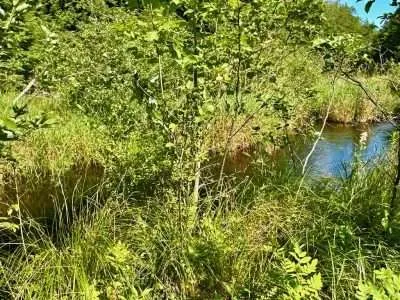
If your land is located near water bodies or has swampy areas, it may be within a wetland, flood zone, or floodplain, each affecting value differently:
- Wetlands: Areas covered or saturated with water, often with protected status under EPA and Army Corps of Engineers regulations
- Flood zones: FEMA-designated areas with varying flood risk levels, requiring special building considerations
- Floodplains: Areas next to rivers or streams that experience frequent flooding
Land in low-risk flood areas sees minimal value reduction, while high-risk zones and floodplains are valued significantly less. Wetlands can reduce buildable area and require permits under Section 404 of the Clean Water Act, though they may add value for specific uses like hunting land.
Wetlands, floodplains, flood zones, poor drainage, and other environmental conditions can also limit where structures, roads, or septic systems can be placed.
These features do not always make land undesirable. Wetlands, streams, woods, and difficult terrain may still appeal to hunting or recreational buyers, so their effect depends partly on the property's intended use.
Utilities
Access to power, water, and sewer or septic can make land more useful and reduce the amount a buyer must spend after purchasing it.
A property with electricity at the road and access to public water may be worth more than a similar parcel requiring new power lines, a well, and a septic system. The effect on value depends heavily on local installation costs and how buyers expect to use the land.
Power connections
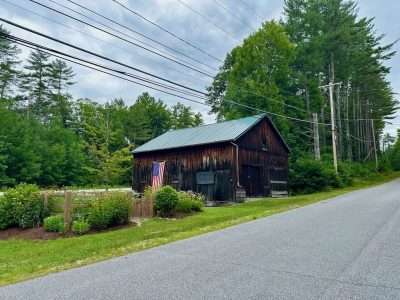
Land with existing power connections is more valuable than parcels requiring new line installation. Extending power lines, whether above-ground or underground, can cost thousands to tens of thousands of dollars depending on distance. Solar power systems offer an alternative for off-grid properties, though they require upfront investment.
Water access
Land connected to municipal or rural water systems commands higher prices. If water lines aren't accessible, buyers face drilling costs ranging from $10,000 to $30,000 or more, depending on depth and local conditions. Some states like Colorado have restrictive well permit regulations that can further complicate water access.
Sewer and septic systems
Properties near municipal sewer lines have higher value due to convenience and lower installation costs. Rural land typically requires septic systems, which cost between $3,500 and $25,000 depending on system type, soil conditions, and local regulations.
Conventional septic systems with leach fields are the most affordable option but require soil that passes a percolation test. Properties with poor drainage may need more expensive aerobic or sand-filter systems. These utility considerations directly impact how much buyers are willing to pay for land.
Improvements and Existing Features
Improvements can increase value when they are useful to the buyers most likely to purchase the property.
Fencing, barns, wells, ponds, driveways, power connections, cleared building sites, and other improvements may add value. However, an improvement does not automatically increase the property's value by the amount it cost to build.
Easements and Property Restrictions
Easements, deed restrictions, conservation agreements, mineral rights, and other limitations can affect how a property can be used.
Some have little effect on value, while others can significantly reduce development options or buyer demand. Reviewing these restrictions is especially important when comparing your property with nearby land sales.
How Much Is an Acre of Land Worth?
There is no single price for an acre of land in the United States. Land values vary widely by location, land type, acreage, access, zoning, utilities, and local demand.
According to the USDA's Land Values Summary, the average U.S. farm real estate value was $4,350 per acre. Cropland averaged $5,830 per acre, while pastureland averaged $1,920 per acre.
These figures are useful benchmarks, but they should not be treated as the value of a specific property. Even two parcels in the same county can have very different values.
How Recent Land Value Trends Affect Your Estimate
When asking “What is my land worth today?”, current market data matters. Land values can change over time, so an estimate based on older prices may no longer reflect today's market.
USDA data shows that average U.S. farm real estate, cropland, and pasture values have all increased in recent years. The table below shows how those national averages changed from 2021 through 2025.
These figures provide useful market context, but they are not a valuation of your specific property. Your land's value can still vary significantly based on location, acreage, access, zoning, utilities, terrain, land use, and recent nearby sales.
U.S. Land Value Trends
| Year | Farm Real Estate ($/acre) | Cropland ($/acre) | Pasture ($/acre) |
|---|---|---|---|
| 2021 | $3,330 | $4,350 | $1,470 |
| 2022 | $3,720 | $4,940 | $1,630 |
| 2023 | $3,970 | $5,320 | $1,740 |
| 2024 | $4,170 | $5,570 | $1,830 |
| 2025 | $4,350 | $5,830 | $1,920 |
Average Land Value by State
State averages can help you understand how land values differ across the country, but they provide only broad context.
For example, USDA farm real estate averages range from less than $1,000 per acre in some western states to more than $20,000 per acre in parts of the Northeast. Those differences reflect land use, population, development pressure, agricultural productivity, and other regional factors.
Use the interactive map below to compare average farm real estate values by state.
Can You Find Land Price Per Acre by ZIP Code?
Land prices can vary even within the same ZIP code, so ZIP code alone usually isn't enough to determine what a specific property is worth.
To estimate land value in a particular area, start with local land-value data and then compare recent sales of similar nearby properties. Our land value estimator uses your county and acreage to provide a starting range, while local comparable sales can help narrow that estimate further.
If you're trying to determine what your land is worth per acre, compare several nearby properties with similar acreage, access, zoning, land use, and other characteristics rather than relying on a ZIP-code average alone.
So how much does an acre of land cost? Here's our full list of average land prices by state to help give you a starting point:
Average Land Value Per Acre by State
| State | Average value per acre | YoY Change |
|---|---|---|
| Rhode Island | $22,500 per acre | +2.3% |
| New Jersey | $16,600 per acre | +2.5% |
| Massachusetts | $14,900 per acre | +4.2% |
| Connecticut | $14,400 per acre | +0.7% |
| California | $13,700 per acre | +2.2% |
| Iowa | $9,790 per acre | +3.9% |
| Maryland | $9,750 per acre | +3.0% |
| Delaware | $9,550 per acre | — |
| Ohio | $9,350 per acre | +6.7% |
| Illinois | $8,930 per acre | +2.6% |
| Indiana | $8,850 per acre | +4.0% |
| Florida | $8,700 per acre | +4.8% |
| Pennsylvania | $8,490 per acre | +4.0% |
| Michigan | $6,800 per acre | +7.8% |
| Minnesota | $6,790 per acre | +5.3% |
| New Hampshire | $6,500 per acre | +4.0% |
| Wisconsin | $6,420 per acre | +4.9% |
| Tennessee | $6,150 per acre | +7.7% |
| Virginia | $6,100 per acre | +4.3% |
| Kentucky | $5,480 per acre | +3.4% |
| North Carolina | $5,470 per acre | +5.4% |
| Missouri | $5,000 per acre | +4.2% |
| South Carolina | $4,740 per acre | +5.3% |
| Georgia | $4,720 per acre | +4.9% |
| Idaho | $4,580 per acre | +4.3% |
| Vermont | $4,400 per acre | +1.1% |
| New York | $4,300 per acre | +3.6% |
| Arkansas | $4,250 per acre | +3.4% |
| Nebraska | $4,250 per acre | +4.2% |
| Arizona | $4,180 per acre | +4.5% |
| Alabama | $4,150 per acre | +3.8% |
| Louisiana | $3,850 per acre | +3.5% |
| Oregon | $3,780 per acre | +1.6% |
| Washington | $3,710 per acre | +2.5% |
| Mississippi | $3,580 per acre | +2.6% |
| West Virginia | $3,520 per acre | +2.9% |
| Utah | $3,500 per acre | +6.1% |
| Maine | $3,350 per acre | +2.8% |
| Kansas | $3,100 per acre | +4.4% |
| Texas | $2,970 per acre | +6.1% |
| South Dakota | $2,970 per acre | +6.8% |
| Oklahoma | $2,540 per acre | +5.8% |
| North Dakota | $2,360 per acre | +4.4% |
| Colorado | $2,290 per acre | +4.1% |
| Montana | $1,230 per acre | +2.5% |
| Nevada | $1,200 per acre | +4.3% |
| Wyoming | $1,000 per acre | +2.6% |
| New Mexico | $725 per acre | +3.6% |
When Do You Need an Appraisal Instead of an Estimate?
A land value estimator and recent comparable sales can give you a useful idea of what your property may be worth. But there are situations where you need a formal, independent valuation.
A licensed land appraiser may be the better choice when the value will be used for:
- Bank financing
- Estate planning
- Court proceedings
- Divorce
- Tax matters
- Other legal or financial decisions
Appraisers typically review recent comparable sales and adjust for differences in acreage, location, access, utilities, zoning, topography, improvements, and other property characteristics.
A professional appraisal is different from an online estimate, an agent's market analysis, or a buyer's cash offer. Each serves a different purpose.
Which Land-Valuation Option Is Right for You?
If your main goal is simply to understand what your land may be worth, start with the estimator and recent comparable sales. If you are considering selling, a property review and cash offer can give you another real-world number to compare.
Land Value Estimate FAQ
How accurate is your land value estimator?
A land value estimator can give you a useful starting range, but it cannot determine the exact value of a specific parcel.
Our estimator uses local land-value data and acreage, while factors such as road access, zoning, utilities, terrain, land use, and recent comparable sales can move the actual value higher or lower. The range is solid because it's built on USDA survey data at the county level, but road access, zoning, and recent nearby sales can push the real number well above or below. For a tighter figure, a professional land appraisal runs $300 to $700.
How do I use your land value calculator?
- Select your state
- Select your county
- Enter your acreage
- Review your estimated land value range
- If you want a more exact value, submit your property details for a closer review
How do I find out what my specific parcel is worth?
Start with the land value estimator to get a general range. Then compare your property with recent sales of similar land nearby, paying attention to acreage, location, access, zoning, utilities, terrain, and land use.
If you are considering selling, you can also request a property review and no-obligation cash offer from Haystack Land Company. If you need a formal value for lending, court, taxes, or an estate, use a licensed appraiser.
Can I Estimate Land Value by Parcel Number?
A parcel number helps identify the exact property, but the parcel number itself does not determine land value. Once the parcel is identified, acreage, location, access, zoning, utilities, land use, and comparable sales can be reviewed to estimate what the property may be worth.
Is a land value estimate the same as an appraisal?
No. An online land value estimate is designed to give you a quick starting range based on available data.
An appraisal is a formal opinion of value completed by a licensed appraiser who evaluates the individual property, comparable sales, and other relevant factors. Appraisals are generally used when an independent valuation is required for a legal or financial purpose.
Is assessed value the same as market value?
Assessed value is primarily used by local governments to calculate property taxes, while market value reflects what the property may reasonably sell for under current market conditions.
Depending on the area, the assessed value may be higher or lower than what buyers are currently willing to pay.
Can I determine land value by multiplying acreage by the average price per acre?
Not reliably. Price per acre is useful for comparing similar properties, but land does not have one fixed per-acre price.
Smaller parcels may sell for more per acre than larger tracts, and differences in location, access, zoning, utilities, land use, and development potential can significantly change the value.
Why can two properties with the same acreage have different values?
Acreage is only one part of land value. Two 20-acre properties in the same county can be worth very different amounts if one has public road frontage, utilities, favorable zoning, and usable terrain while the other has limited access or development restrictions.
This is why parcel-specific characteristics matter when moving beyond a general land value estimate.
Is a cash offer the same as my land's market value?
A cash offer is not the same as land's market value. A cash offer represents what a particular buyer is willing to pay for the property under specific terms.
It can be useful if you are considering selling, but it is different from an appraisal or an estimate of open-market value. Comparing your estimator result, recent comparable sales, and an actual offer can give you more information when deciding what to do with the property.
Do I have to sell if I request a land review or cash offer?
No. Requesting a property review or cash offer from Haystack Land Company does not obligate you to sell.
You can review the offer and decide whether it makes sense for you.
Want a Closer Look at What Your Land May Be Worth?
Get a Free Property Review and No-Obligation Cash Offer
Your land value estimate is a useful starting point, but it cannot account for every detail of your property. Access, zoning, utilities, terrain, land use, restrictions, and recent nearby sales can all affect what your land may be worth.
If you are considering selling, send us your property details and Haystack Land Company will take a closer look at the parcel. If the property fits our buying criteria, we can provide a no-obligation cash offer so you have a real number to consider.
Here’s what happens next:
- Tell us where the property is located and provide a few basic details.
- We review the parcel, recent comparable sales, and current market conditions.
- If the property fits our buying criteria, we typically provide a cash offer within two business days.
- You review the offer and decide whether it works for you. There is no obligation to sell.
Data sources: State-level values come from the USDA Land Values Summary. County-level calculator estimates are derived from 2022 USDA Census of Agriculture data and scaled to 2026 using state-level USDA Land Values Survey growth rates. USDA Land Values Survey figures are statistical estimates based on operator surveys, not recorded sale prices.
