

Own land in Connecticut you’re ready to be done with? We buy it direct, and we pay cash. Connecticut land is squarely in our buy box: wooded lots in the Litchfield Hills, small fields up in the Quiet Corner, and inherited tracts owned by people who moved away and got tired of paying taxes on ground they never use. We’re the buyer, not an agent. You fill out the form with a few details about your property, we look it over, and we send you a fair cash offer, usually within 48 hours.

Haystack Land Company is known for transparency. No shady clauses or last-minute surprises!

We make competitive cash offers in 48 hours and close fast with upfront deposits.

We handle all the paperwork with no closing costs and no realtor commission.

No repairs, cleaning, or improvements needed. We buy land fast!
EXCELLENTTrustindex verifies that the original source of the review is Google. Great experience working with them to sell their property. They answered all my questions in a timely manner and made it smooth from start to finish.Posted on GoogleTrustindex verifies that the original source of the review is Google. Working with the team at Haystack was seamless and expeditious Everyone treated our deal as their top priority and the result was clean & efficient Sold a family 37 parcel in Southern California, from start to finish in 30 days Thanks to everyone over therePosted on GoogleTrustindex verifies that the original source of the review is Google. Haystack Land Company made the process easy from start to finish. Friendly, professional team and excellent communication throughout. Would gladly work with them again!Posted on GoogleTrustindex verifies that the original source of the review is Google. I contacted Haystack Land about purchasing an undeveloped parcel of land that my father had owned for many years. We were in the process of simplifying his estate, and the property was adding a lot of complexity, not to mention unnecessary tax liability. I was initially very skeptical of online land-buying companies, and even more concerned about my father dealing with one on his own. However, selling the land was a high priority for us this year, so I contacted several companies on my father’s behalf. Haystack was one of the few that returned my call, and I was genuinely impressed by how professional and straightforward they were from the beginning. Haystack handled nearly the entire process for us — including surveying the land and covering all associated fees. The transaction ended up being simple and smooth from start to finish. Although my father was the sole owner and seller, Andy, one of the co-founders, kept me informed throughout the process. He even followed up after the sale was completed to confirm we had received payment and to answer any remaining questions. Overall, I was very pleased with how professional, responsive, and easy Haystack Land was to work with.Posted on GoogleTrustindex verifies that the original source of the review is Google. Very great company to work with and cares about there customers i will differently. Suggests them to otherPosted on GoogleTrustindex verifies that the original source of the review is Google. if you ever want to sell a piece of property get in touch with haystack Land company and ask for Robert he's the coolest guy there he's awesome thanks RobertPosted on GoogleTrustindex verifies that the original source of the review is Google. I am writing to share my exceptionally positive experience regarding the recent sale of a family property located in Rome, Ohio, which was expertly facilitated by Haystack Land Company. From our initial engagement through to the successful closing, the professionalism and personalized attention I received from their team were truly outstanding. They fostered an environment of trust and collaboration, making the entire process remarkably smooth and reassuring. For anyone seeking a real estate partner distinguished by transparent communication and unwavering dedication to client satisfaction, I wholeheartedly recommend Haystack Land Company. Their commitment to keeping me informed at every stage was exemplary. I must specifically commend Mr. Andy Rouse, whose exceptional professionalism and diligent approach were evident throughout. His proactive and consistent daily communication, from the initial market assessment to the finalization of the transaction, was invaluable and greatly appreciated. I am profoundly pleased with the outcome and deeply grateful for the comprehensive support and expertise provided by Haystack Land Company. Their service far exceeded my expectations, setting an exceptionally high standard for real estate professionalism. Thank you againPosted on GoogleTrustindex verifies that the original source of the review is Google. Working with Andrew at Haystack Land Company was an excellent experience. He went above and beyond to ensure my land was sold, handling every step of the process with efficiency and professionalism. Communication was clear and consistent, and he made the transaction seamless from start to finish. I truly appreciate the dedication and integrity he demonstrated throughout, and I would highly recommend him to anyone looking to sell their property.Verified by TrustindexTrustindex verified badge is the Universal Symbol of Trust. Only the greatest companies can get the verified badge who has a review score above 4.5, based on customer reviews over the past 12 months. Read more
Selling land in Connecticut doesn’t have to drag on for months. We buy directly, so there’s no agent, no listing, and no waiting on a financed buyer. Here’s how it works, start to finish.
1. Tell Us About Your Connecticut Property
Fill out the form with a few details about your land: where it is, how big it is, and anything you know about access, wetlands, or the town it’s in. The more you can tell us, the faster we can put a number together. It’s free, and you’re not committing to anything.
2. Receive a Fair Cash Offer
We look over your property and put together a fair cash offer. Connecticut has no county recorder, so we research the land at the town level, using the town clerk’s records and the municipal assessor to understand what you own. Once we’ve done that, we send you a straightforward cash offer, usually within 48 hours.
3. Sell Connecticut Land Fast
If the offer works for you, we handle the rest. We cover the title work and closing costs, sort out any title issues, and close with a Connecticut real estate attorney. Any back taxes come out of the sale price at closing. Most sales wrap up in 30 to 45 days, and you get paid in cash.
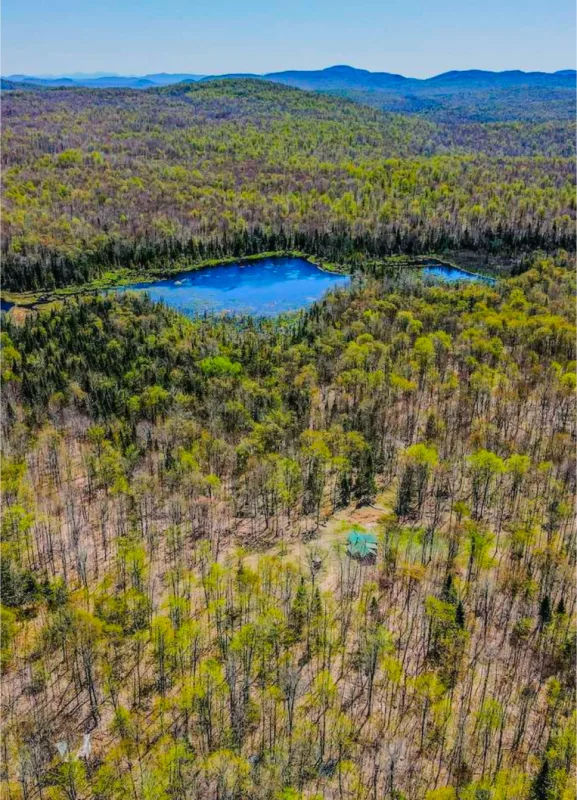
Connecticut is about 58 percent forest, most of it privately owned. We buy wooded lots, hunting ground, and recreational tracts, especially out in the Litchfield Hills and the Quiet Corner. Cash offer, no cleanup needed.
Inherited a piece of Connecticut land you don’t want to keep? We buy inherited tracts and can work with the estate while probate wraps up. No repairs, no listing, just a fair cash offer.
Raw, undeveloped land can be slow to sell on the open market. We pay cash for it as-is, whether or not it has utilities, and we don’t need it cleared or improved first.
A single vacant lot is some of the most straightforward land we buy. Whether it’s a buildable lot in town or an odd piece you’ve held for years, we’ll make a cash offer and handle the closing.
Buildable land near the Long Island Sound shoreline is scarce and valuable. If you own coastal or near-coastal land from Greenwich to Stonington, we’ll take a look and send a fair cash offer.
We buy rural residential land and buildable lots across Connecticut’s quieter corners. No need to fix anything up or run it through an agent. We pay cash and cover the closing costs.
Own commercial or development land you’re ready to move? We buy it directly for cash, no broker in the middle, and close on a timeline that works for you.
With most of Connecticut’s forest in private hands, woodlots and timberland come up often. We pay cash for wooded tracts of all sizes and close without the usual listing hassle.
Behind on property taxes? We buy Connecticut land with back taxes owed, and what’s due comes out of the sale price at closing. You walk away clear, with cash in hand.
Own land with siblings or other heirs and want out? We work with all the owners to make selling simple, with one fair cash offer and a clean closing everyone can agree on.
Connecticut farms average about 76 acres, small and often inherited. Hay ground, tillable fields, and old family farmland in the Connecticut River Valley and the Quiet Corner come our way too, and if the numbers work we’ll make a cash offer with no agent fees.
Hay leads Connecticut’s field crops, followed by corn. Tillable and pasture land comes our way too, still farmed or sitting idle, and if the numbers work we’ll make an offer and handle all the paperwork ourselves.
What Connecticut land is worth depends on the town, road access, how much of it is dry and buildable versus wet or rocky, and whether it’s wooded interior land or near the shoreline. There’s no single per-acre figure for the whole state.
Your town’s assessed value is a starting point, but it isn’t market value. Connecticut assesses real property at 70 percent of fair market value by statute, and that number is fixed at the town’s last revaluation rather than today’s market. A current appraisal or recent sales of similar vacant land in the same town give a truer read.
“Working with Andrew at Haystack Land Company was an excellent experience. He went above and beyond to ensure my land was sold, handling every step of the process with efficiency and professionalism.”
Kelly T, verified Google review
Before you sell Connecticut land, pull together the deed and any paperwork tied to liens, mortgages, or easements. Confirm nothing on record blocks a clean transfer.
One Connecticut-specific step matters most: check whether the land is enrolled in PA 490, the current-use program that assesses farm, forest, and open-space land at its use value instead of market value. It’s common on rural tracts because it cuts the annual tax bill, but selling within ten years of classification can add a state conveyance tax on the full sale price. Knowing your PA 490 status ahead of time keeps that from surprising you at closing.
The fastest way to sell vacant land in Connecticut is directly to a cash buyer. There’s no listing, no commission, and no financed buyer to wait on. You get a cash offer, and the buyer handles the title work and closing.
The other routes take longer. A real estate agent can list the land, but raw land often sits far longer than a house, and you’ll pay commission when it finally sells. Selling it yourself online skips the commission but puts the marketing, the showings, and the paperwork on you. The table below lays the options side by side.
“Andy Rouse and his team are very professional, efficient and reasonable to work with. Every discussion about the sale of the property was thoughtful and I never felt pressured.”
Carol C, verified Google review
| Aspect | Cash Buyer | Realtor | For Sale By Owner |
|---|---|---|---|
| Time to Sell | Fast (as little as 30 days) | Moderate (3-6 months) | Variable (3-12 months) |
| Costs Involved | None (No fees or commissions) | High (commission + closing costs) | Low (Advertising and legal fees) |
| Sale Price | Fair Cash Offer (May be slightly below market value) | Market Value (Subject to market conditions) | Potentially Higher (But not guaranteed) |
| Effort Required | Minimal (We handle everything) | Moderate (Realtor assists) | High (You manage all aspects) |
| Marketing Needed | None | Provided by Realtor | You Handle Marketing |
| Negotiations | Minimal (Direct offer) | Realtor Negotiates | You Negotiate Directly |
| Legal Paperwork | Handled for You | Realtor Assists | Hire Attorney |
| Certainty of Sale | High | Moderate | Low to Moderate |
| Flexibility | High (Flexible closing dates) | Moderate | High (You set terms) |
Getting the most for your Connecticut land starts with pricing it off real comparable sales, not the town’s assessed value, which sits at 70 percent of an older market figure. Look at what similar vacant land in the same town has actually sold for.
Access and title do the rest. Land with clear road frontage and a clean, marketable title is worth more and closes faster than land with an easement question or a lien to clear. If the land is in PA 490, factor in the ten-year conveyance-tax window before you set a timeline. Clearing those up front removes the friction that drags a sale out.
Read More
A few things add value or speed up a Connecticut land sale. Clearing debris and keeping the brush cut makes it easier for a buyer to picture the property. Marking the property boundaries helps a buyer understand exactly what they’re getting.
Access matters more than almost anything on rural land. Clear road frontage and a recorded right-of-way to the property make it far easier to sell and to develop. If utilities like water and power run nearby, note how close they are.
Finally, know your town’s zoning and land-use rules. Whether the land is set up for residential, farm, or commercial use shapes who will buy it and what they’ll pay. The town’s land-use office and the town clerk’s records are where those answers live.
Connecticut land value comes down to the town it’s in, road access, how much is dry and buildable versus wet or rocky, and whether it’s wooded interior land or near the shoreline. There’s no single per-acre number that fits the whole state.
Your town assessor’s card is a starting point, but it isn’t market value. Connecticut assesses real property at 70 percent of fair market value by statute, and that figure is set at the town’s last revaluation, not today. The most reliable way to determine value is a current appraisal or recent sales of similar vacant land in the same town. We look at all of that and send a cash offer, usually within 48 hours.
The most common mistake selling Connecticut land is assuming the town’s assessed value is what the land is worth. It’s set at 70 percent of an older market value, so it usually runs low.
The other frequent misstep is not checking whether the land is enrolled in PA 490 current-use assessment. If it is, selling within ten years of classification can trigger an extra state conveyance tax on the full sale price. Sellers also get tripped up looking for a county recorder, since Connecticut has no county government and deeds are filed with the town clerk. Confirm your PA 490 status and where your records sit before you list.
The main state-specific cost when you sell Connecticut land is the real estate conveyance tax. On raw or unimproved land, the state rate is 0.75 percent of the sale price, plus a municipal rate that starts at 0.25 percent, so most vacant-land sales run about 1 percent combined.
Connecticut has no county government, so there’s no county transfer tax on top of that. A handful of towns designated as targeted investment communities can add up to another 0.25 percent. The conveyance tax is due at closing before the deed can be recorded with the town clerk. When we buy your land directly, we cover the title work and closing costs, and there are no agent commissions on our side.
On the open market, vacant land in Connecticut can sit for months, often longer than a house, because the buyer pool is smaller and financing is harder on raw land. Selling direct to a cash buyer is the fast route.
When you sell to us, you fill out the form, we look over the property, and we send a fair cash offer, usually within 48 hours. If the number works for you, we handle the title work and closing, and we typically close in 30 to 45 days, sometimes less than 30 days. There’s no listing, no showings, and no waiting on a buyer’s mortgage to come through.
The main benefit of selling to a land buying company is speed and certainty. You skip the agent commissions, the listing, and the wait for a financed buyer, and you deal directly with the party writing the check.
We’re the buyer, not a broker, so there’s no middleman marking up the deal. We pay cash, cover the title work and closing costs, and can work around back taxes or a title that needs cleaning up. You get a fair cash offer, usually within 48 hours, and a closing on a timeline that works for you, often in 30 to 45 days.
If your Connecticut land is enrolled in PA 490, the state’s current-use program for farm, forest, or open-space land, selling it can trigger an extra tax you may not expect.
Under Connecticut law, land taken out of PA 490 or sold within ten years of when the owner acquired it owes an additional state conveyance tax on the total sale price. It starts at 10 percent in the first year and steps down one point each year, so it’s 9 percent in year two, 8 percent in year three, and so on, reaching 1 percent in year ten and nothing after that. Enrollment cuts annual property tax, so it’s common on rural and wooded tracts. Confirm your PA 490 status and talk to a tax professional before you sell.
No. Connecticut has no county government, so there’s no county recorder and no county to file your deed with. It’s one of only two states set up this way.
Connecticut abolished county government in 1960. Land records are kept by the town clerk in each of the state’s 169 towns, and property is assessed by the town, not a county. The Census Bureau now uses nine planning regions as county-equivalents for statistics, but those aren’t governments either. People still search and speak by the old county names like Fairfield, Hartford, and Litchfield, but when it comes time to sell, your deed and records live with the town clerk.
Yes. You can sell inherited Connecticut land, but the title usually has to pass through probate first, since the state doesn’t offer transfer-on-death deeds.
Connecticut hasn’t adopted the transfer-on-death deed that states like Ohio and Virginia use, so inherited land generally moves through the probate court before it can be sold, unless it was already titled into a trust or joint ownership. Even when no estate tax is owed, the estate still files Form CT-706 NT with the probate court for the district. We buy inherited land and can work with the estate’s timeline while probate wraps up. It helps to know where the title stands before you get an offer.
For almost every Connecticut land seller, selling inherited land triggers no state estate tax. Connecticut’s estate tax only applies to estates above about $15 million in 2026, which matches the federal exemption.
Connecticut is unusual in two ways worth knowing. It’s the only state with a standalone gift tax, so gifting land during life has its own rules, and it taxes estates over that $15 million line at a flat 12 percent above the exemption. On a sale, your cost basis is generally stepped up to the property’s value on the date you inherited it, which can lower any capital gains. This isn’t tax advice, so confirm the details with a tax professional for your situation.
Selling land in Connecticut through the usual channels means listing it, waiting on a buyer, and paying a commission at the end. Selling it to us skips all of that. We’re the buyer, we pay cash, and we cover the title work and closing costs.
Connecticut land is squarely in our buy box, whether it’s wooded, farm, inherited, or sitting with back taxes. Fill out the form with a few details about your property, and we’ll send you a fair cash offer, usually within 48 hours.
“We initially were in contact with Robert with Haystack. He maintained contact throughout the process which was so appreciated. Also communicated with the owner, Andy, who also kept us well informed of everything start to finish. Since you don’t often find this kind of attention to details these days we are very happy!”
Robyn G, verified Google review